You chose Fallbrook for the scenery. The rolling hills, the ancient oak trees, and the quiet, rustic atmosphere make this area unique. But that same natural beauty poses a direct threat to your home comfort system.
Nature does not respect property lines. Your outdoor HVAC unit sits in your yard, exposed to the elements 24/7. To you, it is a machine that keeps your house cool. To a field mouse or a colony of ants, it is a warm, protected fortress.
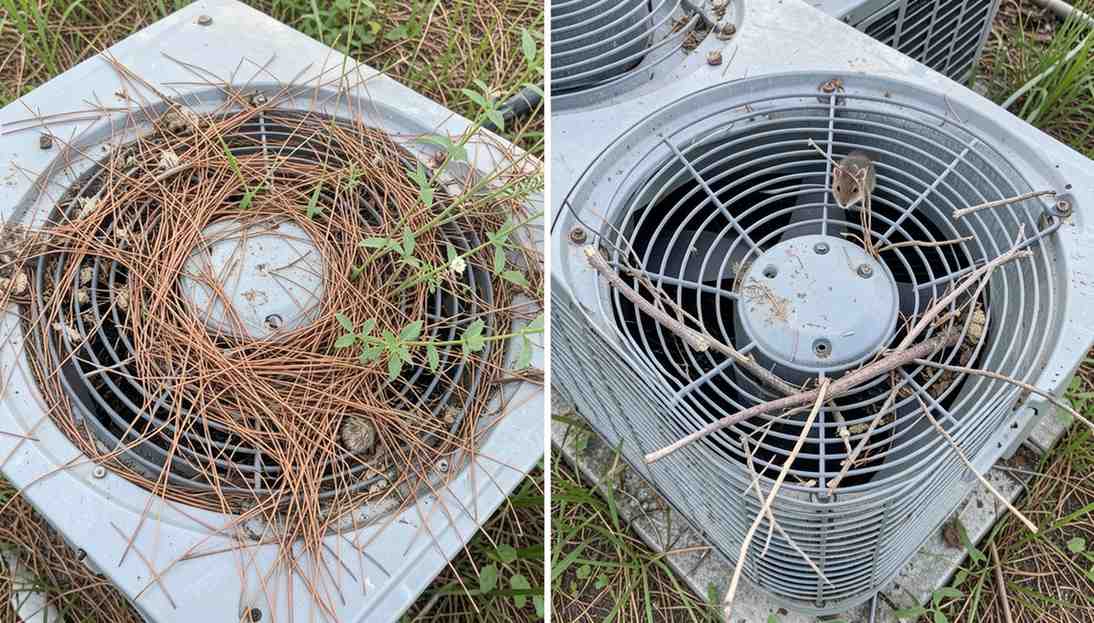
Most homeowners ignore their outdoor condenser until it stops working. By then, the damage is done. A rat chewed through the control wires. A layer of pine needles suffocated the compressor. These are expensive repairs. They are also entirely preventable.
This guide moves beyond basic cleaning tips. We will cover the specific environmental risks in Fallbrook for 2026. We will look at how modern high-efficiency units are more vulnerable to debris than older models. We will give you a strategic defense plan to keep nature out of your machine.
The 2026 Threat Level: Why Debris & Wildlife Are Costing You More
You might think a few leaves or a spider web are harmless. In 2026, that is no longer true. The technology in your backyard has changed, and so has the risk.
The Sensitivity of SEER2 Units
New energy efficiency standards (SEER2) require HVAC manufacturers to design units with tighter tolerances. The copper coils and aluminum fins on modern units are packed closer together. This design extracts more heat, but it also traps debris faster.
On an old unit, a handful of leaves might not matter. On a modern unit, that same handful blocks significant airflow. This forces your compressor to work harder. Your energy bills spike by 15% to 30%. You pay for cool air that you never get.
The “Ants in the Contactor” Phenomenon
We see a specific issue rising in Southern California. Ants are attracted to the electromagnetic fields inside your HVAC unit. They swarm the “contactor.” This is the switch that turns your AC on and off.
When the contactor closes to start the unit, it squashes the ants. Their bodies release formic acid. This acid eats away at the metal contacts. Eventually, the switch fails. Your AC either won’t turn on, or worse, it won’t turn off, running until the compressor burns out.
The Fire Risk Factor
Fallbrook is a high fire risk zone. We all know the drill during Red Flag Warnings. Your HVAC unit contains high-voltage electrical components. If a mouse builds a nest of dry grass and paper inside the electrical panel, you have a tinderbox sitting next to a spark. Keeping your unit clean is not just about comfort. It is about safety.
The “Big Three” Local Threats
You need to know your enemy. In Fallbrook, three specific biological threats cause the most damage to residential HVAC systems.
1. Rodents (Rats and Field Mice)
Rodents are the most destructive pests. They seek warmth in the winter and shelter in the summer.
- The Damage: They chew. Rodents must chew to keep their teeth sharp. They love the low-voltage wires that control your thermostat. They also chew the foam insulation off the refrigerant lines.
- The Cost: A shorted control board can cost $400 to $800. If they chew into the refrigerant line itself, you might need a whole new system.
- Entry Points: They crawl up the “whip” (the flexible hose carrying wires from the house) and squeeze through gaps as small as a dime.
2. Insects (Ants, Wasps, and Spiders)
We already mentioned ants. Wasps pose a different problem. Paper wasps love to build nests under the fan guard.
- The Damage: When the fan spins, it hits the nest. This throws the fan blade off balance. A wobbly fan destroys the motor bearings. It also creates a loud banging noise that vibrates through your walls.
- The Specific Threat: Watch out for Argentine ants. These small, dark ants are aggressive and invade electronics in massive numbers.
3. Vegetation Debris (The Silent Killer)
This is the most common issue in Fallbrook. We have Eucalyptus trees, pine trees, and avocado groves.
- The Culprits: Eucalyptus leaves are oily and stick to the coils. Pine needles are thin enough to slip through the fan guard.
- The Physics: This debris builds a “sweater” around your unit. The condenser coil needs to release heat to the outside air. If it is covered in leaves, it cannot release that heat. The heat stays in the refrigerant. The compressor overheats. An overheated compressor dies years before its time.
Strategic Defense: Physical Barriers That Actually Work
You cannot fight nature with good intentions. You need physical barriers. Here is what works and what destroys your system.
Condenser Covers: The Do’s and Don’ts
You will see “AC Covers” for sale online. Be careful.
- Do Not: Use a solid plastic or canvas tarp that covers the entire unit all the way to the ground. This traps moisture. Moisture creates rust. It also creates a cozy, dry home for mice. Never run your AC with a cover on. You will kill the compressor in minutes.
- Do: Use a mesh “leaf guard” or “compressor cover.” These are made of PVC-coated mesh. They sit on top of the fan guard. They stop pine needles and leaves from falling inside, but they allow air to flow freely. You can leave these on while the unit runs.
Cable Shielding
Look at the copper pipes running from your house to the outdoor unit. They are covered in black foam. Rats love this foam.
- Action Step: Upgrade to “Armaflex” insulation with a UV-protective coating. Better yet, install a hard plastic line-set cover (often called Slimduct). This creates a hard shell that rodents cannot chew through. It also looks cleaner and protects the insulation from the sun.
The “Rat Guard” Install
Rodents often enter through the bottom of the electrical service panel on the unit.
- Pro Tip: We can install small pieces of hardware cloth (metal mesh) over these openings. This blocks the entry point but lets air cool the electrical components. Do not use steel wool. Steel wool rusts and falls apart. Use galvanized mesh or copper mesh.
Landscaping for Airflow: The “2-Foot Rule”
You control the environment around your unit. The landscaping choices you make determine how well your system breathes.
The Golden Rule
Maintain a strict 2-foot clearance zone around the entire unit. No bushes, no flowers, no fences within 24 inches.
Fallbrook Specific Landscaping
- Avoid: Oleander, Bougainvillea, and shedding pine trees near the unit. These plants drop too much debris.
- Use Gravel: Remove the mulch or bark chips around the base of your AC. Mulch holds moisture. Moisture attracts termites and roaches. Replace the mulch with crushed rock or pea gravel.
- Why Gravel Works: It drains instantly. It stays dry. Animals do not like walking on shifting rocks. It creates a “fire break” around your equipment.
- Vertical Clearance: Look up. Do you have tree branches directly over the fan? Sap will drip onto the motor. Heavy limbs could fall during a Santa Ana wind event. Trim any branches within 6 feet of the top of the unit.
The Chemical-Free Defense: Deterrents for Fallbrook Homes
You might not want to put poison bait stations in your backyard, especially if you have pets. You can use natural deterrents to keep critters away.
Scent Deterrents
Rodents have sensitive noses. They hate strong, minty smells.
- The Method: Buy peppermint oil pads or specialized rodent repellent pouches. Place them near the base of the unit. Do not put them inside the electrical panel, as the oils can be flammable.
- The Schedule: You must replace these every 30 days. The scent fades quickly outdoors.
Ultrasonic Repellers
You will see devices that claim to chase rats away with sound.
- The Truth: The results are mixed. They work for a few days, but animals often get used to the noise. Do not rely on these as your only defense. Physical barriers are superior.
Ant Bait Stations
If you see a trail of ants leading to your unit, act immediately.
- The Strategy: Place Terro liquid bait stations or similar borax-based baits around the gravel perimeter. Do not put the bait inside the unit. You want to draw the ants away from the machine, not invite them in for a meal.
Maintenance Checklist: Monthly DIY vs. Annual Pro Service
You can do a lot to protect your system, but you cannot do everything. Here is the division of labor.
Homeowner Monthly Tasks
Put this on your calendar for the first Saturday of every month.
- Visual Scan: Walk out to the unit. Look at the wires. do you see any frayed insulation? Look for droppings on the concrete pad.
- The Hose Down: Turn the thermostat to “Off.” Get your garden hose. Use a gentle spray setting. Spray the outside of the coils from top to bottom. This washes away dust and pollen.
- Warning: Never use a pressure washer. The high pressure will bend the aluminum fins flat. If you bend the fins, you block the airflow permanently.
- Clear the Zone: Pull any weeds growing in the gravel. Rake away the leaves that drifted against the unit.
Pro Annual Tasks (Our Service)
Some jobs are dangerous or require specialized tools. Once a year, preferably in spring, a technician should perform a deep clean.
- Cabinet Removal: We take the top and sides off the unit. This allows us to remove the nests and debris that fall to the bottom floor of the cabinet. You cannot reach this debris from the outside.
- Contactor Cleaning: We inspect the electrical contactor. We clean off the carbon buildup and ant carcasses. If the contactor is pitted, we replace it before it sticks.
- Fin Straightening: If hail or a weed whacker bent your fins, we use a “fin comb” tool to straighten them out. This restores the proper airflow and efficiency.
- Capacitor Check: We test the run capacitor. This component gives the compressor the jolt it needs to start. Heat and vibrations weaken it. We spot a weak capacitor before it fails on the hottest day of the year.
The battle against nature is constant in Fallbrook. Your HVAC unit fights heat, wind, and wildlife every day. It needs you to fight for it.
Take a look at your unit today. Is the 2-foot zone clear? Do you hear strange noises? Do not wait for the system to fail during a heatwave.
Prevention is cheaper than replacement. At Appliance Repair Fallbrook, we specialize in hardening systems against local threats. If you need a deep clean, a rodent inspection, or a wire repair, we are here to help. Keep your home cool and your equipment safe.
FAQs: Wildlife & Debris Protection
Q: Can I put a roof over my AC unit to stop leaves?
Only if you install it correctly. You must mount it at least 4 to 5 feet above the top of the fan. The air coming out of the top is hot. If the roof is too low, that hot air hits the roof and recirculates back into the unit. This kills your efficiency.
Q: Is dog urine bad for my AC?
Yes. It is catastrophic. Dog urine is acidic. It reacts with the aluminum fins and copper coils. It turns the metal into dust. We have seen coils completely eaten away in less than six months. If you have a male dog, build a small, breathable fence around the unit immediately.
Q: How do I know if a rat is inside my AC?
Listen. Turn the unit off and stand near it. Do you hear scratching or rustling? Look at the service panel. Do you see insulation fluff poking out of the cracks? Do you see a pile of seed shells nearby? These are active signs of infestation.
Q: Does homeowner’s insurance cover rodent damage to HVAC?
Usually, no. Most insurance policies classify rodent damage as a “maintenance issue.” They argue that you could have prevented it. You are likely on the hook for the full repair bill. This makes prevention the only financial smart choice.
Q: Can I spray bug killer directly into the AC unit?
Do not do this. Many bug sprays are oil-based. The oil coats the coils and attracts dirt. The dirt builds up and blocks airflow. Also, the spray can be conductive and cause a short circuit on the control board. Use bait stations around the perimeter instead.