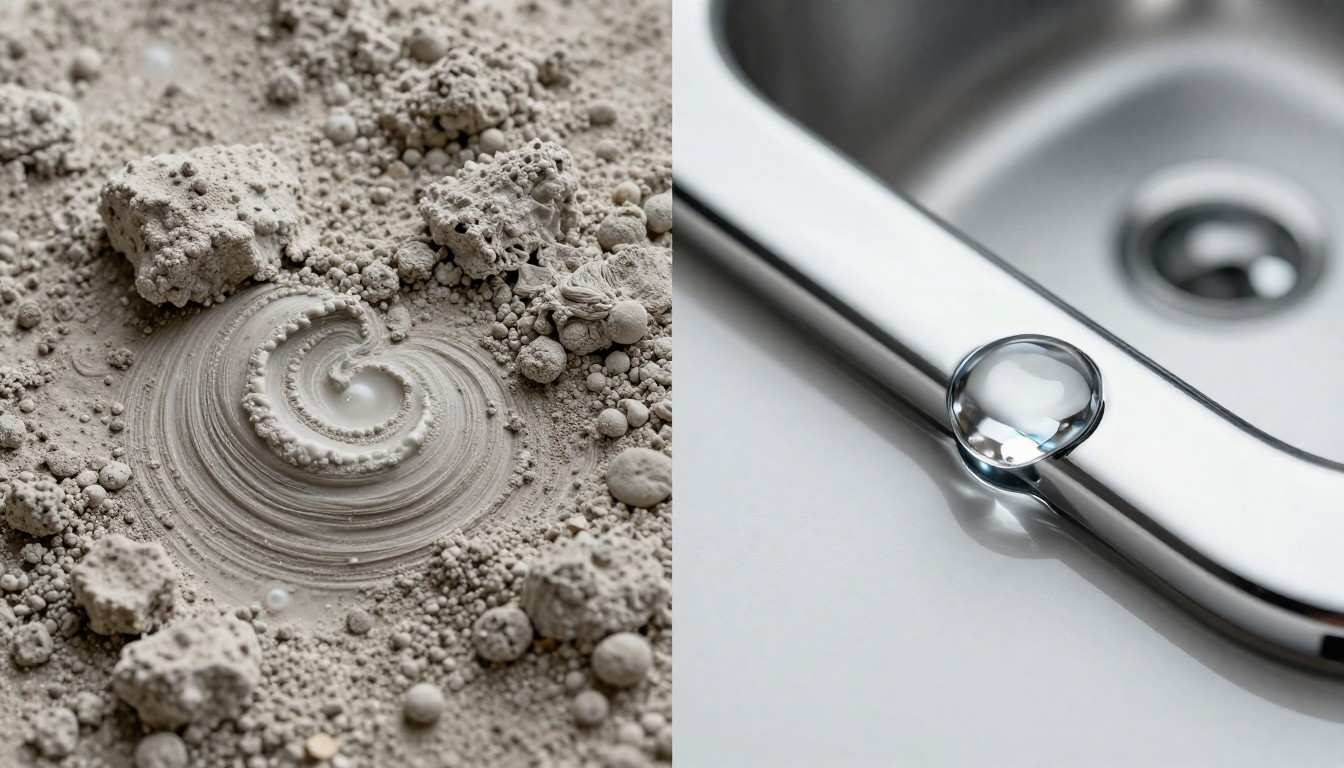
You finish a load of dishes. You open the dishwasher door. You expect sparkling glasses. You see cloudy, spotted tumblers instead. You might blame the detergent. You might blame the machine. But if you live in Fallbrook, the real culprit is likely the water itself.
We love our community. The rolling hills and the avocado groves make Fallbrook a special place to live. But the local geography comes with a hidden price tag. That price tag is hard water.
Fallbrook Public Utility District (FPUD) sources a large portion of our water from the Colorado River and the State Water Project. This water travels hundreds of miles. It picks up minerals like calcium and magnesium along the way. By the time it reaches your faucet, it is heavy with dissolved rock.
Most homeowners ignore this issue until a pipe bursts or a heater fails. You cannot afford to ignore it. Hard water is a silent appliance killer. It eats away at your plumbing and ruins your expensive machines from the inside out.
This guide explains exactly what is happening in your pipes right now. We will look at the specific chemistry of Fallbrook’s water. We will calculate the financial cost to your household. Most importantly, we will give you actionable steps to stop the damage and save your appliances.
The Science: Just How Hard Is Fallbrook’s Water in 2026?
You need to understand the scale of the problem. Water hardness is measured in grains per gallon (gpg). The national average in the United States is around 5 to 7 gpg.
Fallbrook is different.
FPUD reports indicate our local water hardness frequently averages between 13 and 15 grains per gallon. In some specific pockets of North County, it tests even higher.
The Water Quality Association classifies anything over 10.5 gpg as “very hard.” We are well past that limit.
Imagine a standard aspirin tablet. Now imagine that tablet is made of crushed limestone. 15 grains of hardness means you have the equivalent of one aspirin tablet of dissolved rock in every single gallon of water you use.
An average family of four uses about 300 gallons of water a day. That means roughly 300 “aspirin tablets” of rock flow through your pipes, heaters, and valves every single day. That rock has to go somewhere. It does not just disappear. It solidifies inside your appliances. This process is called scale buildup.
The Financial Hit: What Hard Water Costs You
You might think hard water is just a nuisance. You see the spots on the shower door. You feel the dry skin. But the real damage happens to your bank account. The costs show up in three specific ways.
1. The Energy Efficiency Drop
Scale acts as an insulator. It coats the heating elements in your dishwasher and water heater. The heat cannot transfer efficiently into the water. It has to push through a layer of rock first.
Studies show that just 1/16th of an inch of scale buildup can increase energy consumption by 29% to 48%. You pay for the electricity or gas to heat the rock before you heat the water. Your utility bills creep up month after month. You assume rates are rising. In reality, your appliances are suffocating.
2. The Detergent Tax
Hard water minerals fight against soap. Calcium and magnesium bond with the chemicals in your detergent. This reaction creates soap curd instead of suds.
You likely use two or three times more laundry detergent, shampoo, and dish soap than necessary. You have to use that much just to get a basic clean. This is a hidden tax on every grocery trip.
3. Premature Replacement
This is the most painful cost. Hard water cuts the life expectancy of water-using appliances by 30% to 50%. A high-end washing machine should last 12 years. In Fallbrook, it might fail in seven. A tankless water heater should last 20 years. Untreated water can kill it in five. You end up buying appliances twice as often as homeowners in soft-water areas.
Deep Dive: How Hard Water Destroys Specific Appliances
You need to know exactly how this damage occurs. We fix these machines every day. We see the insides of appliances that lost the battle against minerals. Here is the breakdown by appliance.
Water Heaters: The Primary Victim
Your water heater takes the biggest hit. Heat accelerates the separation of minerals from the water. The hotter the water gets, the faster the scale forms.
Traditional Tank Heaters:
Sediment settles at the bottom of the tank. It covers the gas burner or the electric heating element. The burner has to work harder to heat the water through this layer of sediment. This causes the metal tank to overheat. The constant overheating weakens the steel. Eventually, the tank cracks and leaks.
- The Warning Sign: Listen for a popping or rumbling sound. This is “kettling.” It is the sound of steam bubbles trapped under the sediment layer exploding upward. If you hear this, your heater is in trouble.
Tankless Water Heaters:
Many Fallbrook homeowners switch to tankless units for efficiency. Hard water is even more dangerous for these units. Tankless heaters use narrow copper or stainless steel heat exchangers. The passages are small. Scale builds up quickly in these narrow tubes. It restricts water flow. The sensors detect the overheating and shut the system down to prevent a fire. You get an error code and a cold shower.
Refrigerators and Ice Makers
Your refrigerator is a complex machine. The ice maker relies on a tiny component called a solenoid valve. This valve opens and closes to let water into the ice mold.
Scale deposits jam this valve. Sometimes it sticks shut. You get no ice. Sometimes it sticks open. You come home to a flooded kitchen floor.
Modern fridges with “Craft Ice” or “Spherical Ice” features are highly sensitive. These slow-melting ice makers require precise water metering. Mineral buildup disrupts the timing. The result is cloudy, hollow, or misshapen ice. The repair often involves replacing the entire door assembly or the ice master unit.
Dishwashers
You see the spots on your glasses. That is the cosmetic issue. The mechanical issue is more severe.
Hard water is abrasive. It acts like liquid sandpaper. It degrades the rubber seals around the door and the pump. Eventually, the seals crack and the unit leaks.
Inside the machine, chunks of calcium break off from the heater. These chunks get stuck in the spray arms. The holes clog. The water cannot spray with force. Your dishes come out dirty. You blame the machine, but the machine is just choked with minerals.
Washing Machines
Washing machines suffer from two main issues.
First, scale builds up on the drum and the spider bracket that holds the drum in place. This rough surface snags delicate fabrics. Your clothes wear out faster.
Second, the sensors fail. Modern washers weigh the clothes to determine water levels. Scale buildup interferes with these sensors. The machine thinks it is empty when it is full. It creates “load imbalance” errors. The spin cycle fails to start. You end up with a tub full of wet, heavy clothes.
The 2026 Solution Guide: Softeners vs. Conditioners
You have options. The technology for handling hard water has improved significantly. You need to choose the right system for your home and local regulations.
Option A: Salt-Based Water Softeners
This is the gold standard for removal. These systems use ion exchange. They swap calcium and magnesium ions for sodium ions.
The Pros:
This is the only way to get “soft” water. Your soap will lather instantly. Your dishes will dry spotless. You will remove the minerals entirely.
The Cons:
You must refill heavy salt bags. You must discharge salty wastewater. Some communities in San Diego County have restrictions on salt discharge. You must check the current status with FPUD or your local jurisdiction. However, modern high-efficiency (HE) softeners use very little salt and water compared to older models.
Option B: Salt-Free Water Conditioners (TAC)
These systems do not remove minerals. They change them. They use Template Assisted Crystallization (TAC). The media attracts the minerals and turns them into microscopic crystals. These crystals flow through your pipes without sticking to the metal.
The Pros:
These are legal everywhere in California. They require no salt. They waste no water. They need no electricity. They protect the heater and pipes effectively.
The Cons:
The water is technically still hard. You will not get the slippery feel in the shower. You might still see white spots on glass, but the spots wipe off easily because they are dust, not crusted rock.
Option C: Polyphosphate Cartridges
This is a targeted solution. You can install a small cartridge filter directly on the cold water line feeding your water heater. The filter releases a food-grade phosphate. This coats the minerals and prevents them from sticking to the heater tank.
The Pros:
It is cheap and easy to install.
The Cons:
It only protects the one appliance. It does not help your shower, your dishwasher, or your laundry. You have to change the cartridge every six months.
Maintenance Tips: How to Extend Appliance Life Today
You might not be ready to install a whole-house system today. You can still take steps to protect your investment. Here is a maintenance protocol for Fallbrook homes.
1. The Annual Heater Flush
You must flush your water heater once a year.
- Step 1: Turn off the gas or electricity to the heater.
- Step 2: Connect a garden hose to the drain valve at the bottom.
- Step 3: Run the other end of the hose outside.
- Step 4: Open the valve and let the water run until it is clear.
- Step 5: Open the cold water supply valve in bursts to stir up the sediment at the bottom.
If you have a tankless unit, you need a descaling kit. You circulate white vinegar through the system for 45 minutes to dissolve the scale.
2. The Dishwasher Detox
Buy a citric acid-based dishwasher cleaner. Products like Lemi Shine work well. Run an empty cycle on the hottest setting with this cleaner once a month. The acid dissolves the mineral buildup in the pump and spray arms.
3. The Vinegar Soak
Remove your faucet aerators and showerheads. Soak them in a bowl of warm vinegar for an hour. Scrub them with an old toothbrush. This restores water pressure and prevents the fixture from cracking due to pressure buildup.
4. Adjust Your Detergent
Stop using powder detergents. They do not dissolve well in hard water. Switch to high-quality liquid detergents. Use a rinse aid in your dishwasher. The rinse aid breaks the surface tension of the water so it slides off the glass before it can dry into spots.
When to Call a Professional
DIY maintenance helps, but it has limits. You need a professional assessment if you notice specific red flags.
Call for help if your water heater makes loud rumbling noises. This means the sediment layer is already critical. Call if your water pressure drops significantly in just one fixture. This suggests a localized clog in a valve or supply line. Call if you see rust-colored streaks in your laundry. This indicates the inner drum or pump is corroding.
We can perform a water hardness test at your kitchen sink. We can check the anode rod in your water heater. This rod is a “sacrificial” piece of metal designed to corrode so your tank does not. If the rod is gone, your tank is next. Replacing a $50 anode rod can save you a $2,000 replacement job.
Hard water is a reality of life in our area. You cannot change the water coming from the street. You can change how you handle it.
Protect your home. Save your money. Don’t let minerals destroy your appliances. If you suspect your water heater is struggling or your washer is failing, we are here to help. At Appliance Repair Fallbrook, we know local water and we know how to fix the damage it causes. Schedule your inspection today and stop the silent killer in your pipes.
FAQs: Hard Water in Fallbrook
Q: Is hard water safe to drink?
Yes. The minerals are calcium and magnesium. These are nutrients your body needs. The problem is financial damage to your home, not health damage to your body.
Q: Will a water softener void my appliance warranty?
Generally, no. In fact, ignoring hard water is the risk. Many manufacturers state that warranties do not cover damage caused by scale buildup. Protecting your water supply helps you keep your warranty valid.
Q: How do I know if I have hard water without a test?
Look at your faucet. Is there a white, crusty ring where the water comes out? Look at your shower glass. Is it impossible to keep clear? Does your skin feel itchy after a bath? These are the classic signs of hardness levels over 10 gpg.
Q: Can I just use vinegar to clean the inside of my washing machine?
You can, but it might not be enough. Vinegar is a mild acid. Fallbrook water creates heavy scale. You often need a commercial descaler specifically designed for washing machines to break down the thick deposits on the outer tub.
Q: Do magnets work to soften water?
You will see ads for magnetic devices that clamp onto pipes. The scientific consensus is mixed to poor. They do not remove minerals. They claim to alter the charge of the particles. For the heavy hardness levels in Fallbrook (15 gpg), magnetic devices are usually insufficient. You need a physical barrier (filter) or a chemical exchange (softener).
Q: What is the best setting for my water softener in Fallbrook?
You should set your hardness level to 15 grains per gallon initially. Test the water after a week. If it still feels slippery, dial it back to 13. If you still see spots, dial it up to 16. Do not guess. Over-softening wastes salt. Under-softening wastes money.