You see the notification pop up on your phone. “Flex Alert Issued.” The news reports warn of straining power grids. Your neighbors start turning off lights.
For many Fallbrook residents, these alerts feel like a hassle. You might worry about losing power in the middle of a heatwave. You might stress about expensive electricity bills.
But in 2026, managing a Flex Alert is not just about survival. It is about strategy. The way you use your appliances during these critical hours determines two things: how much money you save and how long your expensive equipment lasts.
California has made massive strides in renewable energy. We have added gigawatts of battery storage to the grid. Yet, the intense heat of a Fallbrook summer still challenges the system. When the sun goes down and solar production stops, the demand for power spikes.
This guide gives you a tactical plan. We will move beyond generic advice like “turn off the lights.” We will look at how to protect your AC compressor from brownouts. We will explain the “Pre-Cooling” protocol used by energy experts. We will show you how to automate your home to save money without lifting a finger.
The New Normal of 2026 Grid Alerts
The power grid has changed. Years ago, we worried about having enough power plants. Today, we have plenty of solar power during the day. The problem is timing.
We have an abundance of clean energy at 1 PM. We have a shortage at 7 PM.
This imbalance creates the “Net Peak.” This is the window when solar farms go offline, but families come home, cook dinner, and blast the air conditioning. To prevent blackouts, the grid operator (CAISO) issues Flex Alerts.
You need to pay attention to these alerts for financial reasons. Most Fallbrook homes are now on aggressive Time-of-Use (TOU) rate plans. During a Flex Alert or “Critical Peak Pricing” event, the cost of electricity can triple. Running your dryer at 5 PM could cost you three times as much as running it at 10 AM.
What is a Flex Alert? (And Why You Should Care)
A Flex Alert is a voluntary call to conserve energy. It is a signal that reserves are low. If demand does not drop, the grid operator may have to initiate rotating outages to prevent a total system collapse.
The trigger is almost always heat. When temperatures in inland valleys like Fallbrook stay high overnight, AC units never shut off. The grid never gets a break.
If you ignore these alerts, you risk two things. First, you risk a power outage for your neighborhood. Second, you face “super-peak” pricing. Saving energy during these hours is the single most effective way to lower your summer utility bill.
The Golden Hours: Understanding 4 PM – 9 PM
Memorize this window: 4 PM to 9 PM.
This is the danger zone. Before 4 PM, the grid is flooded with cheap solar energy. After 9 PM, demand drops as businesses close and temperatures cool.
Your strategy is simple. You want to shift 100% of your heavy electrical usage to the hours before 4 PM or after 9 PM.
Think of your home’s energy use like traffic. You don’t want to drive during rush hour. You want to drive when the roads are empty. Using your appliances outside the 4-9 PM window is like driving on an open freeway. It is cheaper, faster, and less stressful for everyone.
Strategic Appliance Management: Who Runs When?
You do not have to sit in the dark. You just need to know which appliances are energy hogs and which are safe to use.
The “Do Not Run” List (4 PM – 9 PM)
These appliances consume massive amounts of electricity. They generate heat, which forces your AC to work harder. Keep these off during the alert.
1. Electric Clothes Dryer:
This is the biggest energy consumer in most homes. It uses a heating element that draws 3,000 to 5,000 watts. Running a dryer during a Flex Alert is the most expensive laundry load you will ever do.
2. Dishwasher:
Even “Eco” cycles use a heating element to dry the dishes. The drying cycle alone can pull 1,200 watts. Load the dishwasher after dinner, but use the “Delay Start” button to run it after 9 PM.
3. Electric Oven:
Baking a casserole at 400 degrees heats up your kitchen. Your AC has to fight that heat. You pay for the oven’s electricity, and then you pay for the AC to remove that heat. It is a double penalty.
4. Pool Pumps:
A variable-speed pool pump is efficient, but an older single-speed pump is a monster. Set your pool timer to run from 8 AM to 3 PM. It will keep the pool clean using cheap solar power.
The “Safe to Run” List
You can still live comfortably. These devices use very little power.
1. Microwave and Air Fryer:
These small appliances cook food quickly. They do not heat up the kitchen. An air fryer uses half the energy of a full-sized oven.
2. Ceiling and Oscillating Fans:
A fan uses pennies worth of electricity. It creates a “wind chill” effect that makes you feel 4 to 6 degrees cooler. This allows you to set your thermostat higher without suffering.
3. Laptops and TVs:
Modern LED televisions and laptops are very efficient. You can watch a movie or work on your computer without guilt.
Pre-Cooling: The AC Strategy That Saves Money
The biggest challenge is air conditioning. You want to stay cool, but your AC is the largest load on the grid. The solution is “Pre-Cooling.”
Treat your home like a battery. You can “charge” your home with cold air when power is cheap and abundant.
The Pre-Cooling Protocol
Step 1: The Super Cool (12 PM – 3 PM)
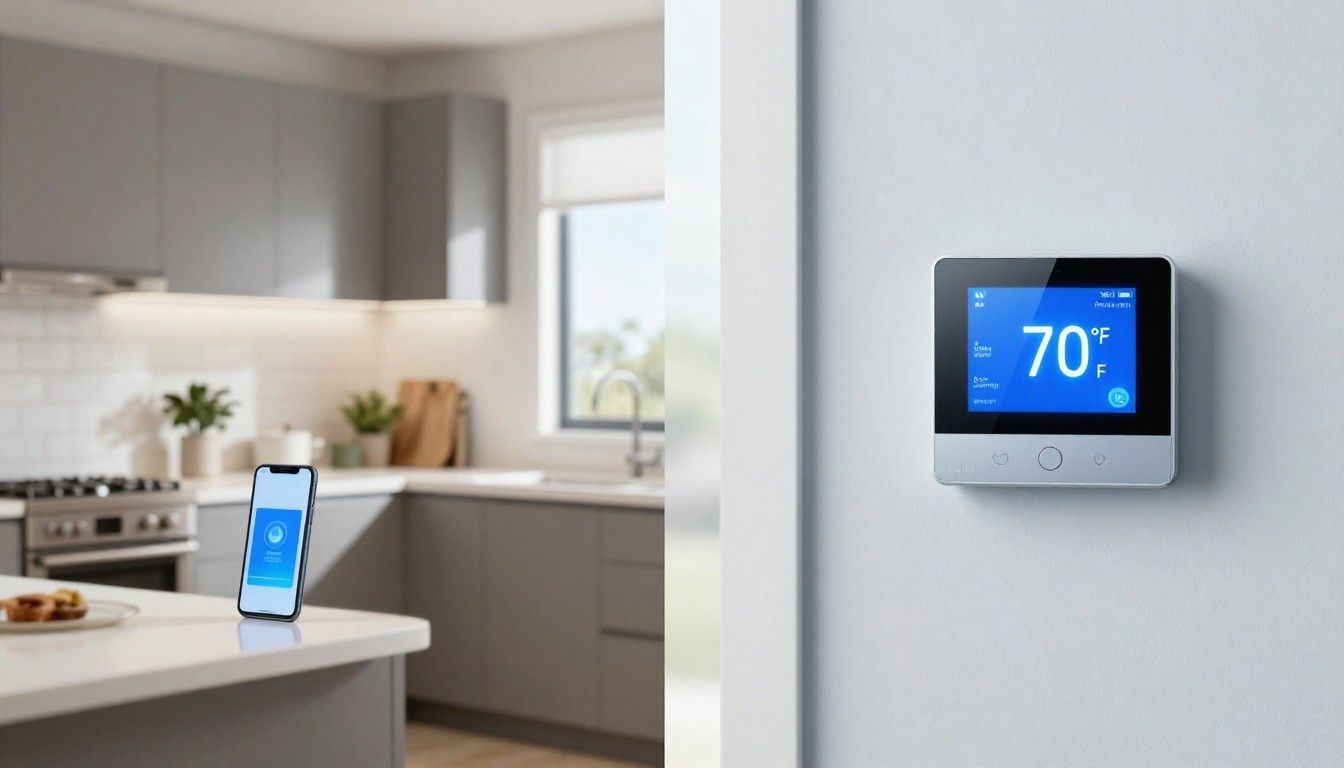
Set your thermostat to 70°F or 72°F. Yes, this is cold. You are using the cheap, midday solar power to chill the structure of your house—the walls, the furniture, the floors.
Step 2: The Coast (4 PM – 9 PM)
When the Flex Alert starts at 4 PM, bump your thermostat up to 78°F or even 80°F.
Step 3: The Result
Your AC will turn off. Because you super-cooled the house earlier, the temperature will slowly drift up. It might take four or five hours to reach 78°F. By the time the house feels warm, the alert is over. You stayed cool all afternoon without running the compressor during the peak pricing window.
Smart Appliances: Letting Automation Do the Work
In 2026, your appliances can help you automatically. Many modern devices have “Demand Response” features built in.
Smart Thermostats
Devices like Nest or Ecobee can sync with your utility provider. They know when peak pricing starts. They can automatically run the Pre-Cooling protocol for you. You do not have to remember to change the temperature.
Smart Water Heaters
Electric heat pump water heaters are gaining popularity in Fallbrook. A smart water heater can “superheat” the water to 140°F in the afternoon (with a mixing valve to prevent scalding). It acts like a thermal battery. The heater turns off during the alert, but you still have plenty of hot water for evening showers.
EV Chargers
If you drive an electric vehicle, never plug it in at 5 PM. Set your charger or your car’s software to “Charge by Departure Time.” Tell the car you need to leave at 7 AM. The smart system will wait until after midnight to start charging, when rates are lowest and the grid is stable.
The “Power Surge” Risk: Protecting Electronics
Grid stress brings another risk: voltage fluctuation. When millions of AC units kick on and off, the voltage in the lines can dip (brownout) and spike (surge).
This is dangerous for motors. Your refrigerator and AC compressor rely on steady voltage. A brownout forces the motor to draw more current to compensate. This builds up heat in the motor windings. Over time, this burns out the compressor.
Protection Strategy 1: Hard Start Kits
If you have an older AC unit (5+ years), consider installing a “Hard Start Kit.” This is a capacitor that gives the compressor an extra boost at startup. It helps the unit start quickly and smoothly, even if the grid voltage is slightly low.
Protection Strategy 2: Whole-Home Surge Protection
A power outage often ends with a surge when the power comes back on. A whole-home surge protector installs at your breaker panel. It sacrifices itself to stop a voltage spike from destroying your AC board, your smart fridge, and your computer.
2026 Incentives: Getting Paid to Save Energy
You can actually make money during Flex Alerts. California utilities offer “Power Saver Rewards” programs.
You sign up once. When you reduce your usage during an event, the utility calculates how much energy you saved compared to your average use. They apply a bill credit for every kilowatt-hour you avoided. It is a simple way to lower your bill.
For homeowners looking for total independence, 2026 brings continued rebates for home battery storage (SGIP). If you pair a battery with solar panels, you can disconnect from the grid during the 4-9 PM window entirely. You run your house off the battery. You pay zero peak rates. You feel zero grid stress.
Managing a Flex Alert is about being smart, not suffering. You can keep your home comfortable and your appliances safe with a little planning.
Pre-cool your home. Delay the dishwasher. Protect your expensive motors from voltage surges.
If you are concerned about how your AC handles the heat, or if you want to install a hard start kit to protect your compressor, we are ready to assist. At Appliance Repair Fallbrook, we help you navigate the challenges of the modern grid. Keep your cool, save your cash, and let us handle the rest.
FAQs: Grid Alerts & Home Safety
Q: Will my food spoil if I don't open the fridge during an alert?
No. A refrigerator acts like a cooler. If you keep the door closed, food stays safe for 4 hours without power. During a Flex Alert, your fridge still has power; it just might not run as often if you programmed it to be efficient. Keep the door shut to keep the cold in.
Q: Can I do laundry if I wash in cold water?
The washing machine itself uses very little power. The motor is efficient. If you wash with cold water and then hang-dry your clothes, you are fine. The danger is the dryer. Do not touch the dryer until after 9 PM.
Q: Is it dangerous to run my AC during a Flex Alert?
It is not dangerous to the machine, provided the voltage is stable. However, running it contributes to the problem. If everyone runs their AC, the local transformer can overheat and blow a fuse, knocking out power for your whole street.
Q: Do solar panels exempt me from Flex Alerts?
This is a common misconception. Most residential solar systems are “grid-tied.” They shut down automatically if the grid goes down for safety. Also, at 7 PM during a Flex Alert, the sun is down. Your panels are producing zero power. Unless you have a battery, you are pulling from the grid just like your neighbors.